
In the Spotlight: What is a Hybrid Internship and is it Right for You?
19 May 2026
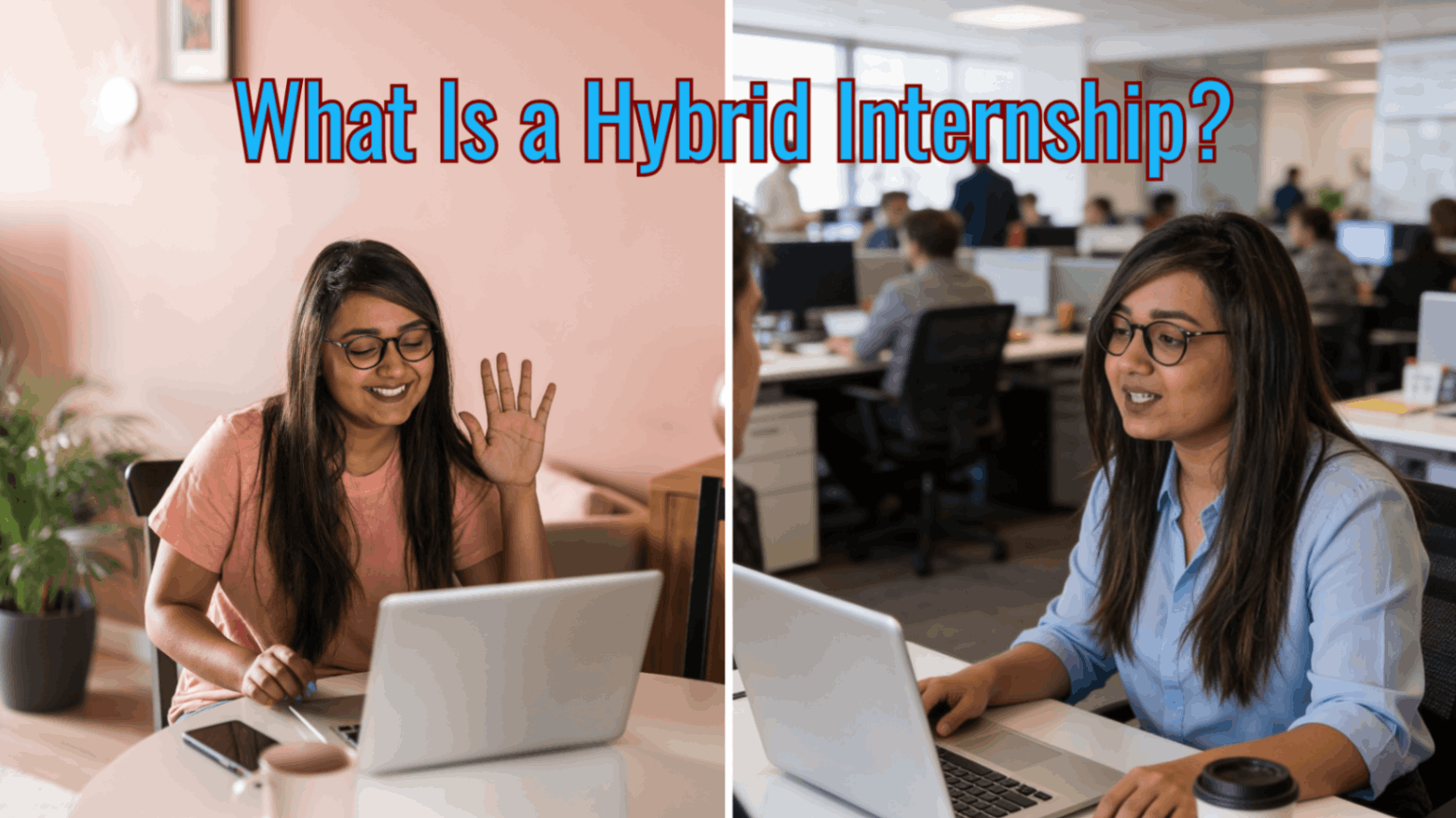
When you imagine an internship in Australia, you probably envision walking into a busy office, a high-tech lab or a bustling project site every weekday morning. But in reality, your schedule might look a bit different. You are just as likely to spend your internship weeks splitting time between a physical workplace and your own desk at home.
This is the hybrid model, and it is the standard way for many local Australian companies to operate.
If you are mid-way through your university degree, this mix of onsite and remote work can sound a bit mysterious. How do you get practical experience and industry exposure when your supervisor is on a screen? How do you make professional connections when you are interning from your student accommodation or a local wifi-strong cafe?
A hybrid internship offers a massive opportunity to fast-track your professional skills, though navigating this model brings specific challenges alongside the benefits. Let's look past the concept and talk about what a hybrid placement looks like on a day-to-day basis, including the great learning opportunities and the traps to avoid.
What does a hybrid internship mean?
A hybrid internship is a professional work experience placement that splits your time between a physical workplace or work site and a remote (online-based) working environment. This remote environment could be your home desk or a university library.
An engineering or IT intern might spend two days a week at a city headquarters or a project site to collaborate face-to-face with a team. They then spend the remaining three days interning remotely. During those remote days, they might complete technical tasks, write reports or write code independently with online access to supervision and support.
This model is a permanent change in how businesses operate. Many companies choose this setup for a number of practical reasons. It could be because it helps them manage smaller office spaces, it reduces daily commuting for teams in tricky locations, it offers more flexibility for workers and better work-life balance. And in many cases it just makes overall business sense when the company’s operations can be handled through remote arrangements.
What are the main advantages of a hybrid internship?
The hybrid model offers an environment that combines the best parts of office life and remote work. This structure accelerates your transition from a student into a work-ready graduate by providing a number of benefits.
1. Rapid growth in professional skills
You would usually have a supervisor sitting nearby to guide your next move in a traditional office or laboratory setting. In a hybrid setting, you must develop professional independence much faster.
On the days when you intern remotely, you’ll be on a fast learning curve to manage your own schedule, prioritise your tasks and solve problems without someone looking over your shoulder.
Future employers will be delighted with these specific skills in self-management, time organisation and independent problem-solving. A successful hybrid internship will speak for you and prove that you do not need constant supervision to get your tasks done.
2. Dual communication mastery
Communicating well is a complex yet attainable skill to master. During your hybrid internship you must develop your fluency in two different styles of professional interaction by splitting your time between the physical workplace and digital channels.
You learn about effective face-to-face collaboration, active listening in meetings and the spontaneous social banter that builds trust with colleagues on your onsite days.
You’ll also learn how to communicate efficiently through digital tools like Google Workplace, Trello, Slack or Microsoft Teams on your remote days. You learn how to write clear and concise emails and project updates and ask precise questions that respect your supervisor’s and team's time.
3. Practical work-life balance and flexibility
Commuting to a busy internship workplace or construction site every day can be exhausting, especially when you are trying to balance university study or personal commitments.
The hybrid model eliminates the commute on remote days. This saves you energy and gives you extra time to focus deeply on complex technical tasks without the usual interruptions of a busy workplace.
What are the potential challenges of a hybrid internship?
You must be realistic about the challenges of a hybrid arrangement because every workplace model has trade-offs. Understanding these potential challenges early helps you prepare for them successfully.
1. The challenge of building immediate connections
It can take a bit longer to feel like a true part of the team when you are physically present just a few days a week. You might miss out on the spontaneous kitchen conversations or casual coffee runs or having lunch with team members. It is easy to feel disconnected from the workplace energy if you sit quietly on your remote internship days.
2. The challenge of blurred boundaries
It can be difficult to switch off when your bedroom or study desk becomes your internship workplace. Some interns struggle with time boundaries. They feel a hidden pressure to check emails or work on projects long after office hours have ended. This habit can quickly lead to fatigue if you do not protect your personal time.
On the other hand, you may struggle with getting to your internship tasks on time and during your internship hours when there is no supervisor checking on you. Also, you may feel tempted not to get yourself ready for the day in the same way you would if you were having an onsite day.
3. You need to be a self-starter or super-willing to learn
A hybrid internship is highly rewarding, but it is not the right fit for every student. This model will not work for you if you expect constant instructions and check-ups, continuous supervision or a rigid checklist for every hour of the day. To succeed in a mixed environment, you need to be brave enough to take the first step independently.
You must be highly organised, show up to online meetings on time and be super-willing to learn fast. Because your supervisor is not always physically with you in the same space, success depends on your ability to speak up, ask smart questions and actively seek clarification when you get stuck. You have to be a self-starter who treats the lack of constant supervision as an invitation to show initiative rather than an excuse to sit back and wait.
How do you balance the hybrid experience successfully?
You can thrive in a hybrid internship by understanding that your remote days are just as important as your onsite days. You must actively manage your visibility and your workflow regardless of whether you are onsite or interning remotely on the day.
You need to get yourself ready for the day and start on time even on your remote days. Online team meetings are a great opportunity to connect with your supervisor and team members. But if you keep your video off, perhaps because you feel you are not looking presentable, you will lose that opportunity to connect.
Maximise your face-to-face interactions on your onsite days. Use this time to ask your supervisor complex questions, shadow colleagues and sit in on collaborative brainstorming sessions. Treat these days as your chance to build strong personal connections and absorb the team culture.
Focus on execution and clear communication on your remote days. Start your day by sending a quick, structured message to your supervisor outlining what you plan to achieve. Let them know when you finish a task. You prove that your productivity remains high by staying active and structured on your digital channels.
Tip: Treat autonomy as an opportunity to show initiative. Do not wait for a message if you complete your remote tasks early. Reach out to a colleague and ask if you can help with their project.
To sum it up: How a hybrid internship prepares you for the future
A hybrid internship is one of the most effective ways to build a highly adaptable professional identity fast. It forces you to step outside the passive learning mindset of a classroom. It forces you to take initiative and learn to manage your time and your task flow fast. It’s a whole lesson on navigating this mixed type workplace dynamic.
The slight challenges of managing your own time and staying connected are small prices to pay for the massive benefits. You will finish your placement with technical skills, a proven ability to manage projects independently, excellent platform communication skills and high adaptability. This flexibility is exactly what will make you stand out as a candidate in an ever-evolving graduate employment landscape.